
Emotional and Intellectual Payoff

Some stories gain power by tapping into the emotions that we felt at a particular age, or during a certain time of our lives. For example, some novels use nostalgia as a powerful draw. I can think of a few extremely popular fantasy novels that hearken back to Tolkien’s work. Years ago, one major reviewer […]
How to Develop a Fictional Character: 7 Tips a Best-Selling Author

Of all the topics on how to write, I suspect more books have been written on how to create solid characters than on anything else. So there are a lot of great resources out there on how to create characters, and I can’t even touch on every topic that I would like in the space […]
The Super Writers’ Bundle
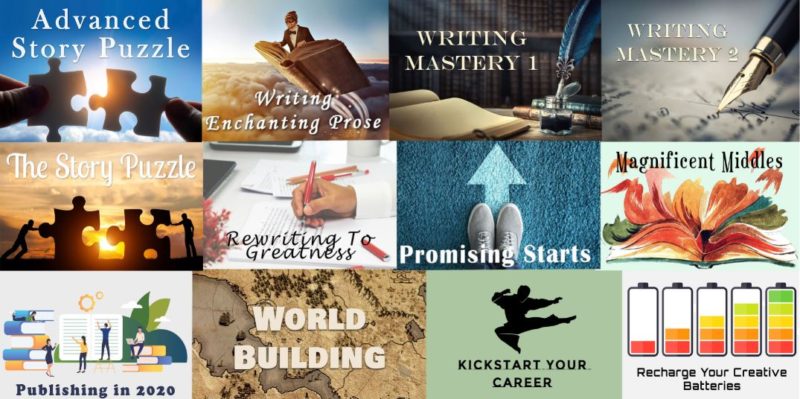
The Writers’ Bundle—On Sale Now! David Farland has helped dozens of authors hit the New York Times bestseller list, contributing to the careers of J.K. Rowling, Stephenie Meyer, Brandon Sanderson, James Dashner, and many more. With this bundle, you’ll get access to the audited versions of Dave’s online workshops and receive copies of his writing […]
Tips for Plotting Your Novel

A plot doesn’t have to be brilliant for a story to work. It just needs to have some basic components: characters, in conflict, and in a setting. The characters must struggle to overcome some obstacle (or obtain some goal) on three or more occasions, and the tale must resolve in such a way so that […]
Writing Easy

I’ve been a bit sick for the past few months. In fact, back in September I got sepsis and had to make a trip to the emergency room at the hospital. I had a high fever and plummeting blood pressure, so the doctors put me on fluids and a broad-spectrum antibiotic. Once you start treatment, […]
Writing Tip and David Farland’s Illness

I’d like to talk a bit about how to deal with criticism that you disagree with. There are a lot of reasons that people will dislike your work that have nothing to do with your work. If you look at online reviews of Lord of the Rings, which is widely acclaimed as perhaps the best […]
Wolves and Sheep

I heard it again last week, the theory that “villains and heroes are both the same, they see themselves as the protagonists of their own stories.” Not usually. It is true that sometimes a villain imagines himself to be a hero. An ecologist who blows up a tractor in order to save the redwood forest […]
Playing Nice

Recently I saw a news story where an elderly basketball fan for the Utah Jazz was given gifts by some players. The woman, at age 102, had a hard time getting to games, so the team gave her season tickets while one player gave an autographed shoe, another a blanket with the team logo, and […]
It’s not the Thread, it’s the Weave

Many new writers when they start a tale will concern themselves with the “narrative thread” of the story, or the plot line. Here’s a definition of “narrative thread” from Wikipedia: A narrative thread, or plot thread (or, more ambiguously, a storyline), refers to particular elements and techniques of writing to center the story in the […]
When to Stop Polishing a Manuscript
Many new writers don’t know when to stop polishing a manuscript and move on to the next. Part of the reason for that might have to do with Ernest Hemingway. Many years ago, a writer asked Hemingway, “How many times should I rewrite a manuscript?” Now, Hemingway hated dumb questions, so he answered “Oh, at […]