

A Comprehensive Guide to Traditional and Self-Publishing Options
Are you looking to publish a book? Let me tell you how to get it done.
Today, there are two paths to publishing: traditional publishing and self- (or independent) publishing.
Traditional publishing generally refers to an established publishing house, employing requisition editors, editors, copyeditors, a design team, marketers/promotion specialists and sales teams. The publishing house may be small, releasing eBooks only, or it may be very large, producing thousands of titles a year.
An example of a small house might be Entangled Publishing, while a large house would be Penguin Random House. Typically, when writers refer to traditional publishers, they’re talking about Penguin Random House, Simon & Schuster, Harper Collins, Macmillan U.S., and Hachette Book Group (commonly referred to as legacy publishers).
Self-publishing, often called independent or indie publishing, is what it sounds like: It’s your business and you are responsible for the creation, editing, production and promotion of your book. Once called vanity publishing, it no longer carries the same stigma, as successful indie authors put their books through the same rigorous quality controls as traditional authors do.
Whether you choose to pursue traditional publishing, or plan to publish your book yourself, the first steps of the journey are the same: Write an excellent book. Vet it carefully and thoroughly. Have it professionally edited. And don’t give up on it.
Author, Entrepeneur and former CEO of Thomas Nelson Publishers (a large, traditional publishing house) Michael Hyatt is a great resource on positioning yourself to get published.
How to Know if Your Book is Ready for Publication
Regardless of your publishing path, the first step is always the same—write an excellent book.
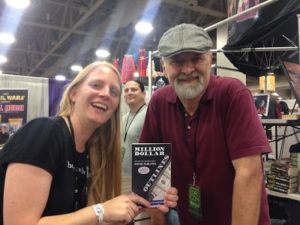
I’ve written a couple books that will help you—Million Dollar Outlines and Drawing on the Power of Resonance in Writing.
- Know your genre and what’s selling. If the market is saturated with teenage vampire books, then don’t let it surprise you if your teen vamp book doesn’t sell. Your job is to see into the future to the next big thing. Watch the trends and research what agents are looking for to make sure that you’re writing something that has market value.
- Devise a powerful opening strategy. The most successful books utilize one of two strategies, or a combination of both—front-load the book, giving the reader a massive conflict on the opening page (Brandon Sanderson’s Elantris; Robert Jordan’s prologue to The Wheel of Time) and create a mystery in the opening pages, taking perhaps a dozen chapters to reveal the main conflict (Rick Riordan’s The Lightning Thief; James Dashner’s The Maze Runner).
- Craft your story like a three-act play, with a climax at around the middle. Make sure it’s powerful and emotional so that it draws your reader along.
- Grant your readers the ultimate payoff at the end. If you’ve written a romance, make sure the love interests are together and the final kiss is one worth waiting for, etc.
Subscribe to David Farland’s #WritingTips for the web’s best writing advice delivered right to your inbox.
How to Ensure Your Book is As Good As It Can Get
Despite our best efforts, no writer can create their best work without the help of others.
Every author needs an army of reliable and cutthroat beta readers, and a well-informed editor. This is your team, and you need to be prepared to utilize them and listen to them.
A beta reader is a person who will read early drafts of your book and offer constructive criticism. It’s nice to know what they like, but you’re really looking for what doesn’t work. Readers who just say, “I loved it!” are good for the soul, but ultimately will not help you get your book published. Savvy readers will offer helpful information like, “I liked how you set up this scene, but I was kind of lost. I couldn’t tell if we were inside or outside, if it was night or day …” etc. That kind of feedback can actually help you improve your work and is exactly what you’re looking for from your beta readers.
You should plan to use beta readers in at least two different “rounds”, with three to five readers in each round—but do not use the same reader more than once for the same book. It’s important that you get a fresh perspective with each version of your book.
Finish your book, revise and edit it to the best of your ability, then send it out to your first round of beta readers. Try to get readers who can read your book fairly quickly, preferably within two weeks. This is important because the story, and their reactions and feelings, stay fresh in their mind and you’re more likely to get an accurate and helpful critique. When you receive the notes from your readers, do your best to address their issues, remembering that ultimately, it’s the readers you want to please (if you want to sell books!).
Once you’ve made your corrections based on your first round of beta readers, it’s time to send the book out for a round two read.
Repeat the beta/revise process until you’re certain your book is as good as you can get it.
Your final step before submitting to agents, or proceeding with your independent release, is to have your book professionally edited. An agent or reader will never get the chance to discover how awesome your book is if typos and poor grammar turn them off on page three. Editing, and presenting a clean book to your readers is one of the most important things you can do for your success.
Enroll in David Farland’s Rewriting to Greatness workshop today!
To embark on a 100-day writing adventure that will reshape the way you tell stories!
Click here to get Daily Meditations: Writers Tips for 100 Days FREE!