
Strategic Authoring: Plan Like a Pro, Write Like a Rebel – Part 4
Assess, Adjust, and Build a Writing Life That Lasts Welcome to the final installment of the Strategic Authoring: Plan Like a Pro, Write Like a Rebel series! Over the past few posts, we’ve explored how to build a writing life that’s both intentional and creatively fulfilling. We started by identifying your why, defining what success […]
Strategic Authoring: Plan Like a Pro, Write Like a Rebel – Part 3
Rebellion, Support, and the Magic Between During this series, we’ve been laying down the essential foundation for your writing journey – Plan Like a Pro, Write Like a Rebel. With Part 1, you’ve hopefully taken the time to define your why—the deeper purpose that drives your passion. You’ve mapped out your destination, creating clear goals […]
Strategic Authoring: Plan Like a Pro, Write Like a Rebel – Part 2
Welcome back to the Strategic Authoring series—where we combine the soul of an artist with the strategy of a professional to help you write with purpose, consistency, and joy. In the first installment, we focused on building a strong foundation: identifying your why, defining what success truly looks like for you, and reverse-engineering your story […]
Choosing a Point of View: Understanding Nuance

When we first start writing, the question of point of view (POV) usually seems straightforward. Either we choose to use the default third-person POV or we use first-person POV (as almost no one uses second-person). The choice seems like it’s just a matter of using “she/he” versus “I” for our viewpoint character. But the more […]
How to Write a Million-Dollar Bestseller: Advice from Stephenie Meyer’s Writing Mentor
Want to discover how Stephenie Meyer created one of the bestselling novels of all time? Learn directly from her mentor, David Farland, who guided her journey from aspiring writer to global literary phenomenon.
How Do You Judge a Story?

Author Mike Resnick has won more Hugo Awards for short stories than any other author. So the other day, I asked him “How do you know when you’re writing a story that it is going to be Hugo-worthy?” His answer surprised me. He said, “Usually, somewhere about the middle of the story, I’ll start to […]
Stories as Transformational Literature
Often we think of stories as mere entertainment, but by telling a story we can actually transform a reader: Identity phase A story does not begin until you have a character, in a milieu, with a conflict. At this phase of the story, my goal is threefold: 1) Create a character who audiences will identify […]
David Farland’s Kick in the Pants—Writing the Perfect Story, Part 3

I’ve been talking about some of the attributes that I would look for in a perfect story, whether it be a novel, movie, or short story. In particular, I’ve been discussing some of the attributes that a story should have that novice writers might not think about when they begin to compose. One I’d like […]
Writing a Perfect Story, Part 15

As one looks at perfect stories, there is nothing that is “required” for the ending. The tale doesn’t have to leave the protagonist in a better state than when it started. Some fine stories actually leave the protagonist emotionally and intellectually ruined. Nor are there any devices that must be used. A perfect story doesn’t […]
Writing a Perfect Story, Part 12
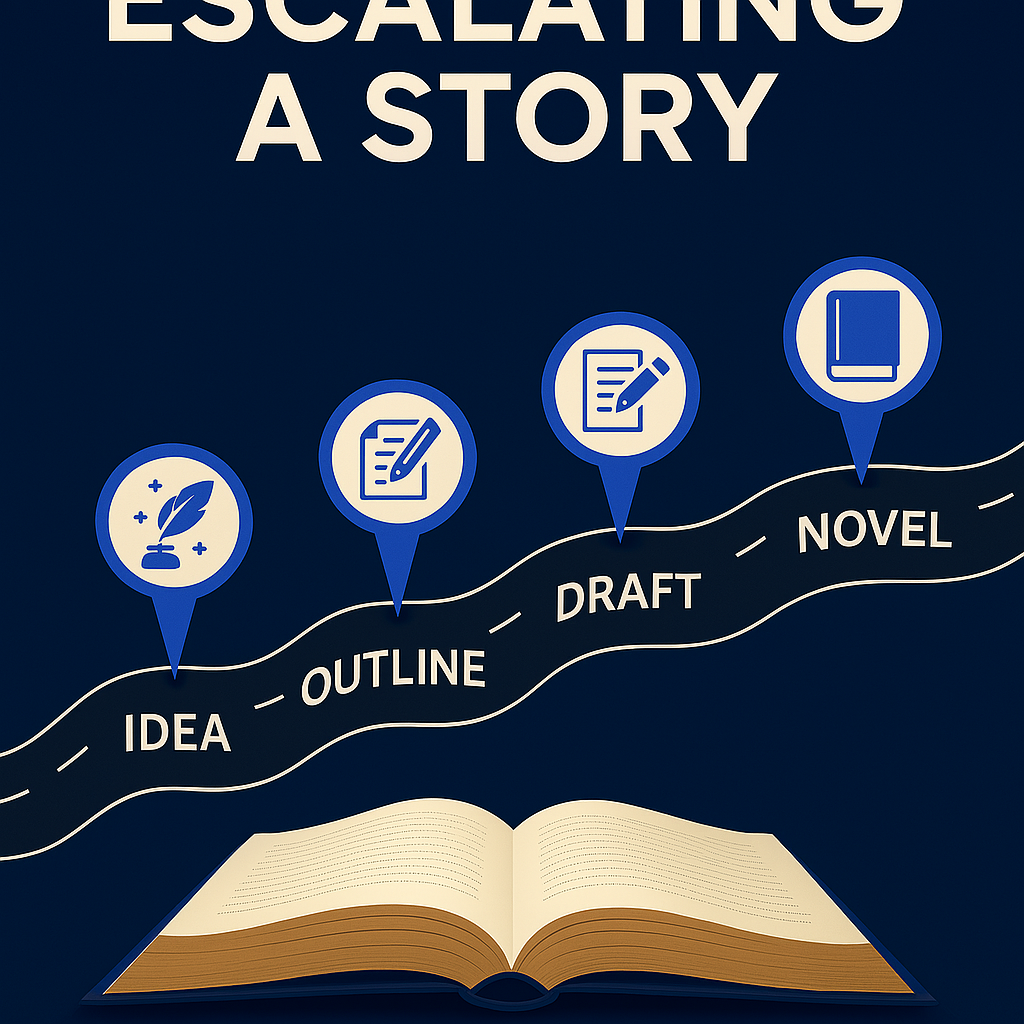
The perfect story escalates smoothly from scene to scene, creating a sense of rising action. I’ve spoken before about ways that stories can escalate. There really are only two ways—through deepening a conflict, making it so that it affects the protagonists more profoundly; or through broadening, so that the conflict affects more people. But a […]