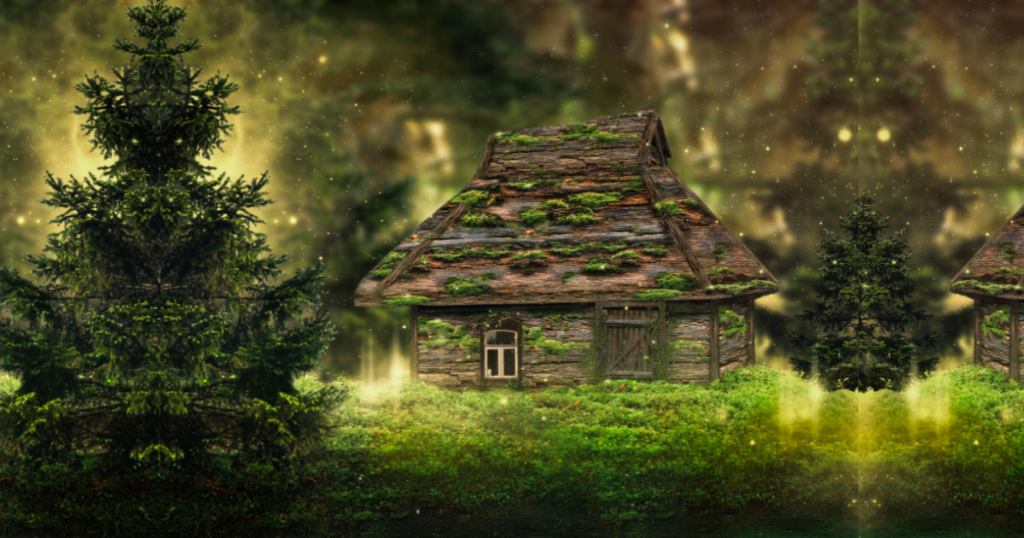

I am currently in Denver but thought I would share checklists over the next few weeks that I use to go over each and every one of my stories to make sure that all of my stories are “up to snuff,” so to speak. I think that setting up your setting is something you need to do early on. Yes, characters are important, but so are their worlds. Can we imagine Lord of the Rings without The Shire? Or The Empire Strikes Back without Dagobah? No matter how big or small, your setting are important, even if they will only be shown for a brief time.
First, a word of warning. When I was very young, perhaps four, I remember seeing a little robot in a store, with flashing lights and wheels that made it move. To me it seemed magical, nearly alive. My parents bought it for me for at Christmas, and a few weeks later it malfunctioned, so I took a hammer to it and pulled out the pieces to see what made it work—a battery, a tiny motor, some small colored lights, cheap paint and stickers.
Your story should be more than the sum of its parts. It should feel magical, alive.
But when we go through a checklist like this, we’re looking at the parts and not the whole. When you’re composing your story and editing it, you must be constantly aware of the whole story, keeping it in mind, even as you examine it in detail, making sure that one part doesn’t overbalance another.
Setting
My goal with my settings is to transport the reader into my world—not just through the senses, but also emotionally and intellectually. I want to make them feel, keep them thinking. This can often be done by using settings that fascinate the reader, that call to them.
1) Do I have unique settings that the reader will find intriguing? In short, is there something that makes my setting different from anything the reader has seen before?
2) If my setting is in our world, is it “sexy” or mundane. (People are drawn to sexy settings. Even if we place a story in a McDonald’s, we need to bring it to life, make it enjoyable.)
3) Do I have any scenes that might be more interesting if the setting were moved elsewhere? (For example, let’s say that I want to show that a king is warlike. Do I open with him speaking to his counselors at a feast, or on the battlefield?)
4) Do I suffer by having repetitive settings? For example, if I set two scenes in the same living room, would one of them be more interesting if I moved it elsewhere?
5) Do my descriptions of settings have enough detail to transport the reader?
6) Did I bring my setting to life using all of the senses—sight, sound, taste, feel, smell?
7) Do my character’s feelings about the setting get across?
8) Do I want to show a setting in the past, present, and suggest a future? (For example, I might talk about a college’s historical growth and importance, etc.)
9) Can a setting be strengthened by describing what it is not?
10) Does my setting resonate with others within its genre?
11) Do my settings have duality—a sometimes ambiguous nature? (For example, my character might love the church where she was married, have fond memories of it, and yet feel a sense of betrayal because her marriage eventually turned ugly. So the setting becomes bittersweet.)
12) Do my settings create potential conflicts in and of themselves that aren’t explored in the text? (If I have a prairie with tall grass and wildfires are a threat, should I have a wildfire in the tale?)
13) Do my characters and my societies grow out of my setting? (If I’ve got a historical setting, do my characters have occupations and attitudes consistent with the milieu? Beyond that, with every society there is almost always a counter-movement. Do I deal with those?)
14) Is my setting, my world, in danger? Do I want it to be?
15) Does my world have a life of its own? For example, if I create a fantasy village, does it have a history, a character of its own? Do I need to create a cast for the village—a mayor, teacher, etc.?
16) Is my setting logically consistent? (For example, let’s say that I have a merchant town. Where would a merchant town most likely be? On a trade route or port—quite possibly at the junction of the two. So I need to consider how fully I’ve developed the world.)
17) Is my setting fully realized? (Let’s say I have a forest. What kinds of trees and plants would be in that forest? What kind of animals? What’s the history of that forest? When did it last have rain or snow? What’s unique about that forest? Etc.)
18) Does my setting intrude into every scene, so that my reader is always grounded? (If I were to set my story in a field, for example, and I have men preparing for battle, I might want to have a lord look up and notice that buzzards are flapping up out of the oaks in the distance, already gathering for the feast. I might want to mention the sun warming my protagonist’s armor, the flies buzzing about his horse’s ears, and so on—all while he is holding an important conversation.
19) Are there any settings that have symbolic import, whose meanings need to be brought to the forefront?
Elevate your storytelling skills with our 100-day writing adventure!
Dive into ‘Daily Meditations: Writer’s Tips for 100 Days‘ for FREE and ignite your creativity. Join us at Apex