

The best twists in storytelling feel both surprising and inevitable, a tall order, yes and it comes from foreshadowing in writing. It’s the balance of planting clues so twists don’t feel like they come out of nowhere, and readers don’t feel cheated. It also provides suspense and gives the sensation of being stunned. And on the second read, readers can marvel at how obvious it all was.
So um…. how do you get it just right?
Finding the Goldilocks Zone
Think of foreshadowing like porridge — it needs to be “just right.”
- Too little, and your twist feels like it was pulled out of thin air. Readers may gasp in surprise, but it won’t be a satisfying gasp. It’ll be more like frustration, because they’ll feel tricked. It’s the narrative equivalent of a magician pulling a rabbit out of a hat without showing any setup.
- Too much, and readers will see the twist coming a mile away. Instead of racing to the end in suspense, they’ll spend the story waiting for the characters to catch up. This robs your climax of tension and drains the payoff.
- Just right, and you create that perfect balance. The clues were there but hidden in plain sight and readers only recognize them in hindsight. On a reread, they’ll spot the breadcrumbs and think, How did I miss that? That’s when you know you’ve nailed it.
So, the sweet spot lies in layering hints with care. Don’t pile them all in one scene. Instead, scatter them across the story. You want them to blend naturally into dialogue, emotion, and description. Use misdirection to keep readers from staring too hard at the real clue. Paint with emotion to let drama disguise what’s important. Put clues in the background details and hide it in plain sight. Done well, foreshadowing isn’t just a technique. It’s a promise that your story will deliver an ending that feels both surprising and inevitable.
Types of Foreshadowing
There’s more than one way to plant clues in a story. Each type has its own flavor, purpose, and level of subtlety. The best writers often weave several together, layering hints so that the eventual twist feels earned rather than forced.
- Direct Foreshadowing – This is the boldest approach. This is an outright hint or prophecy that signals what’s to come. Shakespeare’s Macbeth opens with the witches’ cryptic predictions. In The Hunger Games, the simple gift of a mockingjay pin foreshadows Katniss becoming the symbol of rebellion. And in Percy Jackson and the Lightning Thief, the oracle foretells that one of Percy’s friends will betray him.
Direct foreshadowing works because it sets reader expectations and it does it while also leaving room for suspense in how it will unfold.
- Indirect Foreshadowing – Instead of announcing what’s ahead, this method hides clues in background details which only make sense later. In The Sixth Sense, the recurring presence of red objects hints at ghostly influence. Luke’s vision of fighting Vader and seeing his own face inside the helmet foreshadows their familial connection in Star Wars: The Empire Strikes Back. And in Harry Potter and the Sorcerer’s Stone, Harry’s ability to talk to snakes hints at his connection to Voldemort.
Indirect foreshadowing works because it provides clues that can be spotted during the reread and gives the story a more layered and richer reading experience.
- Symbolic Foreshadowing – Objects, settings, or motifs carry deeper meaning, preparing readers for events on a thematic or emotional level and it filters through your reader’s subconscious. In Frozen, Elsa accidentally hurting Anna as children foreshadows her later loss of control with her ice powers. The frozen winter landscape foreshadows the White Witch’s power and the thaw that will mark her defeat in The Lion, the Witch and the Wardrobe. In The Lord of the Rings: The Two Towers, the recurring image of the White Tree of Gondor foreshadows Aragorn’s role in restoring the kingdom.
Why Symbols work is because you are tapping into foreshadowing on a subconscious level. This helps to make the story feel richer and more cohesive.
- Red Herrings – False trails that mislead the reader help to keep them distracted from the real truth and helps you to hide some of your clues with misdirection. In Harry Potter and the Prisoner of Azkaban, Sirius Black is painted as a dangerous villain, when in fact the real traitor is Pettigrew. Early focus on the Genesis Device as a weapon distracts from Khan’s personal revenge plot in Star Trek II: The Wrath of Khan. In Percy Jackson & The Lightning Thief, Clarisse is set up as the likely thief before the twist reveals Luke as the betrayer.
Red herrings are powerful for building tension — but they need to feel believable, not manipulative.
- Chekhov’s Gun – Named after Anton Chekhov’s famous advice: “If a gun is shown on the wall in Act One, it must fire by Act Three.” This is one of the tools for encouraging attentive reading and avoids readers being irate with plot convenience. In The Hobbit, Bilbo’s discovery of the One Ring sets the stage for an entire saga. Luke’s training with the remote droid foreshadows him using the Force to fire the shot that destroys the Death Star in A New Hope. In Iron Man, Tony Stark builds a mini arc reactor to survive, replaces it with a better one, and displays the old in a glass case. When his new reactor is stolen, he breaks the case and uses the original to stay alive.
These setups create payoffs that feel both inevitable and satisfying, and it makes readers feel like every element in the story belongs.
- Thematic Foreshadowing – This method ties foreshadowing to the story’s central theme. In Moana, her early longing for the sea signals her eventual role as a wayfinder who restores balance. “The Circle of Life” opening number foreshadows Simba’s journey to take his place as king and restore balance in The Lion King. In Encanto, Mirabel’s feeling of being overlooked foreshadows her role as the glue that holds the family together.
Thematic foreshadowing creates cohesion by showing the character’s arc reflected in the story’s motifs.
- Dialogue-Based Foreshadowing – Sometimes, a single line can plant a seed that blossoms later. One famous example is in Star Wars with Obi-Wan’s reassurance, “The Force will be with you, always” becomes a guiding echo for Luke as he faces his greatest challenges.
Dialogue-based foreshadowing is especially effective when casual or offhand, because readers don’t realize its weight until much later.
The Misdirection Toolbox
A little smoke and mirrors goes a long way in foreshadowing. Readers don’t mind being misled. Actually… they kind of they love it, as long as the truth IS always there to be found. Here are some ways to hide your clues in plain sight:
- Distract with emotion or action. Place your hint in the middle of a heated argument, a chase scene, or a highly emotional moment. Readers will be so caught up in the intensity of the scene that they won’t notice the breadcrumb you’ve slipped in.
- Use red herrings that seem logical at the time. Misdirection works best when it feels reasonable. Give readers a plausible alternative explanation or a suspect that they can latch onto and come to the wrong conclusion all while the real clue sits unnoticed.
- Let subplots carry clues in the background. Plant foreshadowing inside a secondary storyline, a side character’s arc, or even casual worldbuilding. Oftentimes readers will assume that the subplot is separate so they won’t connect it to the main twist until later.
- Pair a real hint with a false assumption. Present the true clue alongside a misleading explanation and make it one that your characters (and readers) will readily believe. Later, when the false assumption is revealed as wrong, the real hint suddenly shines in hindsight.
Using Characters as Foreshadowing
Foreshadowing doesn’t always need objects, settings, or symbols. Sometimes the most powerful clues are embedded in the characters themselves. The way they speak, act, and relate to others can quietly signal what’s to come. This makes the payoff feel natural, because it grows directly out of who the characters are.
- A flaw that hints at a future mistake. When a character’s weakness shows up early, it primes readers for how it might become dangerous later. Example: In The Lord of the Rings, Boromir’s ambition and pride foreshadow his eventual attempt to seize the Ring, even though his love for Gondor makes him sympathetic.
- A strength that signals how they’ll triumph. Skills, values, or traits displayed in small ways early on can be the very thing that saves the day later. Example: In Percy Jackson and the Lightning Thief, Percy’s loyalty to his friends is established from the start, foreshadowing his willingness to risk everything to save them in the Underworld.
- A relationship dynamic that points toward betrayal or sacrifice. Subtle tensions or bonds between characters can hint at what’s coming. Example: In Harry Potter and the Deathly Hallows, the cracks between Harry, Ron, and Hermione foreshadow Ron’s temporary desertion. It also sets the stage for his redemptive return and sacrifice for the group.
- A backstory detail that sets up a major reveal. A piece of history or personal detail can be the quiet seed for a future twist. Example: In The Lion, the Witch and the Wardrobe, Edmund’s stubbornness and craving for attention foreshadow how easily he’ll be lured by the Witch. Later, his redemption arc becomes one of the story’s most moving turns.
Characters carry their own foreshadowing because audiences instinctively know that who someone is will shape what they do. By planting those traits early—a flaw, a gift, a strength, or a hidden wound—you can guide readers toward an ending that feels not only surprising, but inevitable.
Testing Your Twist
Even the best writers struggle with balance and it isn’t always easy to know immediately if your twist is too obvious, or is so hidden that it feels random. The key is to test it deliberately and not only go by your gut.
- Do a two-read test. On the first read, your twist should surprise. On the second read, it should feel inevitable. If the reveal still catches readers off guard even when they know what’s coming, it’s probable that you have your clues hidden too deeply. If they see it coming halfway through, you’ve tipped your hand too soon. The sweet spot is that “aha!” moment where hindsight makes every breadcrumb click into place. Example: In The Sixth Sense, audiences are shocked the first time, but on a rewatch the red clues (doors, objects, clothing) along with conversations our protagonist supposedly had with others and didn’t make us see how the clues were all there.
- Ask beta readers when they guessed the truth. Your early readers are your best reality check. Don’t just ask, “Did you like the twist?” Instead ask, “At what point did you suspect the truth?” Their answers will show you whether you’ve over- or under-seeded the clues.
- Reverse outline your story from the twist backward. Start at your big reveal and map each breadcrumb that leads to it. Ask yourself: do you have enough foreshadowing to make it believable? Too many hints in the same place? Too few across the whole arc? Reverse outlining forces you to see whether the path is clear without being neon-lit. Example: In The Lord of the Rings, Gollum’s obsession with the Ring is seeded scene by scene, so when he reappears at the climax, his actions feel like the inevitable culmination of his arc rather than a sudden plot device.
Foreshadowing in Series
Foreshadowing doesn’t have to end with a single book, particularly if you are writing series. You can (and probably should) have it span across your entire series. AND When it’s done well, it deepens immersion, builds anticipation, and gives readers the joy of piecing together a larger puzzle.
- Plant early seeds for long-term payoffs. A detail in Book 1 may not bloom until Book 3 (or beyond). These seeds can be objects, relationships, or mysteries that seem minor until their true importance is revealed. Example: In Harry Potter, the locket Horcrux is mentioned in passing in Book 5, but its full significance explodes in Book 7.
- Echo phrases, imagery, or symbols across volumes. Repetition creates resonance. When readers see a familiar phrase or image return with deeper meaning, it feels like the world is woven together intentionally. Example: In The Hunger Games, the three-finger salute begins as a simple gesture of respect in District 12, but echoes through the later books as a symbol of rebellion, gaining more power each time it’s used.
- Use character arcs as foreshadowing. A character’s early choices can hint at their eventual transformation or downfall. Example: In The Chronicles of Narnia, Edmund’s betrayal in the first book foreshadows the way trust and redemption will define his role in later stories.
- Reward trust along the way. Readers need payoffs in every installment. While some mysteries can simmer across the series, each book should resolve certain promises so readers feel satisfied and hungry for more. Example: In Percy Jackson, each book foreshadows elements of the Great Prophecy, but still resolves a self-contained adventure to keep readers engaged.
- Hold back larger truths for the saga’s climax. The most powerful reveals should tie together threads planted in multiple earlier books. These moments don’t just surprise — they make the entire series feel like one unified story. Example: In Star Wars, Luke’s journey from farm boy to Jedi is seeded with repeated foreshadowing of his heritage, culminating in Vader’s revelation.
The Other Side of Foreshadowing & Final Thoughts
Foreshadowing is more than a craft trick. It’s a promise between writer and reader. When you plant a clue, you’re whispering: “Pay attention. This will matter.” And every promise you make demands a payoff. And you want your payoff to matter.
- Plant clues with intention. Don’t scatter details randomly. Every object, line of dialogue, or moment you highlight should serve a purpose, whether in the next chapter or the final act. Thoughtful planting creates a sense of design that readers instinctively trust.
- Distract without deceiving. The best foreshadowing hides in plain sight. You don’t have to trick your audience with lies — just lead their attention elsewhere. A burst of emotion, a subplot, or a red herring can disguise the truth long enough to preserve the surprise.
- Deliver an ending that is both surprising and inevitable. This is the magic formula. The reveal should shock in the moment but it should also make perfect sense in hindsight. Readers should also feel the satisfaction of solving a puzzle, (if they guessed right) even if they didn’t know they were playing one.
The bottomline is when you master foreshadowing, you give readers one of the greatest gifts in storytelling. You give them that heart-stopping moment when they gasp, “Of course — it was there all along!” And even better, when they immediately want to go back, reread, and uncover the breadcrumbs they missed the first time.
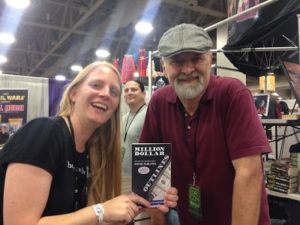
This and other topics are frequently covered with presentations, lectures, discussions, and more on David Farland’s Apex-Writers. To learn more, visit apex-writers.com
TF (Tammy) Burke is a YA fantasy author, journalist, and community builder passionate about weaving worlds where magic, resilience, and wonder collide. She’s the author of the Heart of the Worlds series, including the bestselling Faeries Don’t Lie and Faeries Don’t Forgive, with Faeries Don’t Hide releasing in late 2025.
A former newspaper journalist with over 400 published articles, Tammy blends a love of storytelling, folklore, and medieval history into her work. From local meetups to international zoom calls, she energizes audiences with dynamic author presentations.
She is also an admin, active host and content creator with the Apex-Writers group, an international writing community founded by New York Times bestselling author David Farland, and has served as president and conference chair of the Greater Lehigh Valley Writers Group (GLVWG).