
My arm shook over the mouse button in apprehension. A single shot, a single click, was all I had to turn this hard-sought opportunity into success. What if I wasn’t ready? Had I studied enough? What if I’d played it safe? Was I unoriginal? Hell, anything but that!
Amazing opportunities don’t knock on our doors. “Hello. Opportunity here. Anyone home?” It doesn’t work that way because knockers on our doors are selling something. Yet we see them or hear about them every day. The truth is that opportunity is hidden from us.
We open our doors in the early morning hours when most are still asleep because our stomachs are gnawing with hunger. We take up a weapon, not a sword but a pen, strike out into the wilderness, and hunt this elusive prey down. When we do find it, we don’t invite it in. We club it over the head, drag it back to our dens, and utilize every last bit of it. We feed on it, use its hide to clothe us, shape its bones into tools, and employ them on the next hunt.
Sounds truer than a knock on the door, doesn’t it? It also feels more significant. We value the labor involved. We happily bleed from our fingertips to fill pages of prose. Whether our hunt today is successful or not, deep down, we don’t want to open our door and find opportunity wagging its tail at us, ready to come inside.
But we do wish it was a little easier to catch. It seems like those around us are having better success, and we snarl at their fortunes. As discouraging as those can be, we get up the next morning, earlier, hungrier, and hunt harder because we’re driven to do it.
An inherent skill exists inside us. A God-given gift to create great escapes. Not just regularly encountered landscapes. Strange new wonders. Unique forests that beckon with sweet smells never before imagined. Rock formations that collide with deafening booms as they defy the gravity around them. Claws and fangs that haunt our dreams, and the cute and cuddly that endear our hearts. We fall in love with characters we know more intimately than we know ourselves, and we cry at the unbearable pain we put them through. At times, this gift feels like a curse.
But like any talent, it won’t be ignored. It’s a brilliant light shining out of our pores from the marrow of our bones. Those who know us best are blinded by its radiance. Others see it, but do they understand it?
Many can’t or won’t understand the hours we spend tap, tap, tapping at our keyboards. Some encourage us, help us hunt down small opportunities with an hour of free time here, a couple hours there. Most, either by design or necessity, distract us from the trail we’re tracking. We all have them, some of us more than others.
Few of us embraced our gifts from the beginning and had the courage to choose storytelling as a career. We set it aside and spent our efforts hunting lumbering opportunities. They’re safer, sustainable, and far more attainable. But they taste like mashed potatoes without butter and gravy. We’re dissatisfied and crave greater flavor, greater purpose.
And so, we keep hunting in the margins of our reality, in the in-between hours. We become more successful, more talented. One early morning as the dawn breaks over the horizon, we find fresh tracks. They’re still moist and tracking them gets easier. We catch a glimpse of opportunity through the brush. We’ve dreamed of this moment, worked so hard, and now it appears achievable. What do we do?
We bellow a war cry that strains our throats and sprint after it with feverish vigor. Thorns and brambles be damned. They may slash at our cheeks and catch in our jeans, but nothing will stand in our way. We craft our best prose and chuck it at this opportunity as it flees into the wilderness, risking everything on a swipe of the pen.
That’s how I felt the day I headed out to hunt down Dave Farland’s Writing Mastery One. This course covered topics I thought I knew well but didn’t. I tracked the lessons through hours of study, sharpened my pen, and crafted my best prose in response. All I had left to do was toss it out there.
My arm shook over the mouse button in apprehension. A single shot, a single click, was all I had to turn this hard-sought opportunity into success. What if I wasn’t ready? Had I studied enough? What if I’d played it safe? Was I unoriginal? Hell, anything but that! Had I risked enough? Did I push my creativity far enough? What if I risked too much? Could my ideas be too bizarre? I mean, my lord, I’m filleting open my heart here and asking someone to like it. What if it repulsed them instead? In short, what if it missed?
Doubt slashed at my cheeks and caught in my jeans, but I would not be turned away. I refused to let insecurities hinder my goals. I didn’t click that mouse button. I stabbed it with conviction. My single shot launched through the bushes and was swallowed up by swaying leaves that obstructed my view.
Had the toss struck its mark? Hours passed and night fell. Night slipped by without sleep. Days and nights came and went. I hadn’t anticipated the lag time between chucking my shot and hearing the strike. Finally, I heard the shot land in my inbox, but had I hit my mark or buried my shot in the ground?
I peeled back the brambles with nervous care and peered for signs of success in the margins of my prose. The great opportunity I’d chased was a chance to be read by Dave Farland, one of the industry’s greats and not another amateur like me with blind spots and bad advice. If my prose fell flat, there was still the opportunity for truly experienced feedback. Those little comment bubbles have never been so stressful to read. The first couple were short. A ‘nice job’ here. ‘I liked this simile’ there.
Damn. Well, I’m not terrible, but I’m not blasting socks off his feet either. Wait a minute. He sounded excited in that last bubble. There’s another one. Holy crap! He loved it. Validation! Success! It reached out from my computer screen and punched me through the heart. I felt the energy of it sizzling over my skin.
But it wasn’t perfect. How could it be? Remember those blind spots I mentioned. Well, Dave wasn’t blind to them. I had more work to do. There were many more assignments to complete. I had clubbed opportunity over the head, and I dragged it back to my den. I fed on it. Stretched its hide into hunting leathers. Shaped its bones into spearheads.
The next morning, I woke up earlier, hungrier, because now I had a taste for the juiciest flavor in the wilderness. I carried my success with me and struck out on another hunt. Because the next opportunity wasn’t going to knock on my door. And I didn’t want it to.
Helpful Links
Writing Mastery 1 Online Workshop
David Farland’s Online Writing Workshop
Connect with Ryan Holmes
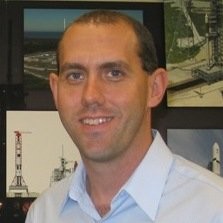
Before I picked up a pen, I clawed my way out of a northern frontier to be baptized as a United States Marine in the swamps of Parris Island. The Marine Corps armed me with ambition, determination, and an old M60 Echo machinegun. I loved that weapon and patrolled the world with it for four glorious years, experiencing alien cultures and wondrous landscapes along the way. Afterward, I turned in the M60 for a college degree and achieved my life-long goal: a career as a NASA aerospace engineer. But unlike the M60, ambition and determination are not easily laid down. I set my sights on a new goal and set out to become an accomplished author. This arduous journey has proven far more difficult than any jungle patrol. But the hardest paths change us the most, and the challenges ahead keep us living.
MyStoryDoctor Success Stories:
Each month we bring you a writing success story. Have one of your own you would like to share? Let us know you are interested in the comments.