
When you release a new book, it shouldn’t just be another book–#32 in your pantheon—it should be an “Event!” It should be something that readers anticipate and look forward to and even celebrate.
Years ago, I recall having my wife and daughter go to release parties for Harry Potter novels. They’d dress up in witch costumes, grab their wands and their wallets, and head out to Barnes & Noble a few hours before midnight.
It was a great experience—a sort of bonding ritual with other fans—but it was also a great photo opportunity. By the time Rowling hit book five in her series, every news network in America was covering the annual ritual, often days in advance. The morning that the books went on sale, I checked the news and found that all four major networks were running the story!
You can’t beat that kind of publicity. When I was asked by the president of Scholastic to help pick a book to push big back in 1998, I chose Harry Potter and then advised her how to make it a huge hit. But in my wildest imagination, I didn’t foresee those national news articles running on the “Event” of the book releases. At the time Harry Potter was released, I recall reading an article that said there were roughly 2-3 million readers of middle-grade novels. But the publicity surrounding Harry Potter was so huge that Rowling made 120 million sales. In other words, she was selling to millions of people who normally didn’t read in that genre.
That’s your goal. As an Apex writer, you want to break out far beyond the limits of your genre. There are estimates that maybe there are four million fantasy readers. But I want to sell to a hundred million readers. So how do you do that?
You have to be Notable. You have to have excited fans lining up to read your books. You want articles, special displays, awards, and so on.
So how do you turn your book release into an “Event”?
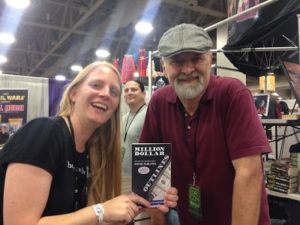
In 1999, I broke the Guinness Record for the world’s largest book signing with a single author and single book. When I was first asked by my publisher to do the signing, I was dubious. I’m not that huge as an author, and I’d had some signings that were read dogs.
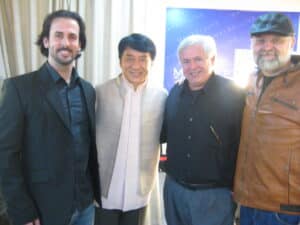
But I allowed the publisher to pursue the idea. We held the signing in Hollywood. We brought in a couple of movie stars and television stars (so that their notoriety became linked to mine). We provided a couple of bands to play music so that folks could dance. We gave out root-beer floats so that people wouldn’t die of thirst while waiting in line.
In short, we tried to make it fun. We let the readers know that we were trying to break a record, and thus invited them to be participants in that effort. I ended up signing over 2000 books in a four-hour period.
So how do you make your release an event?
- Set it up in advance. You need to pre-release a book six months in advance to let it build up pre-sales. You don’t just put it up on Amazon.
- Advertise it. Don’t just put up newspaper announcements before the event—advertise it live and then do it again after the event. Our release was advertised live on the radio, but you can also invite news media and film it so that it can be shown on television news the day after. Don’t forget to memorialize your event in newspapers and magazines.
- Bring in rock bands, movie stars, popular scholars and other celebrities. People might not be willing to come just to see an author, but bring in a few extras, and it can go huge.
- Look for fun items to give away. I’ve used posters, wrist bands, and toys for middle-grade books. Use your imagination.
- Provide free or inexpensive treats. You never know how far your fans might have traveled, or how hungry they might be.
- Make it visual. Consider what props you might want to use. With Battlefield Earth, the sellers used a huge blow-up monster hovering above the store parking lot. When Planet of the Apes came out a few years ago, I saw an army of Apes carrying cages full of human prisoners through the crowd at the E3 gaming convention. Static displays can be cool. Moving displays are better.
- At your release, do a reading to help engage the readers.
- Tie the event to personal and business news—information on the release of upcoming novels, announcements about how high you’ve hit on bestseller lists, a reading of a few advance reviews, mention of movie interest. But remember to make this personal. Tell the readers why you wrote this book now, why it is so vital to you.
- Have raffles for prizes.
Book releases can be fun, but also remember that it doesn’t have to be free. Major authors sometimes have a cover charge for a release. A few years ago, one of my assistants paid $200 to go to a release in New York City of a Rowling book. She had to pay hundreds more for airfare and hotels. As part of the giveaways, the event raffled off 200 of Rowling’s books to her fans.
Just remember: your release needs to be an Event!

***
New Workshops!
I will be teaching at Fyrecon:
Clark Kent to Superman: Find Your Space on the Writing Spectrum
It will be an 8 Hour Master class for $159 (includes 3 day general admission to Fyrecon in July 2020).
Class is limited to 20 students
March 21, 2020 at Fyrelite
https://www.fyrecon.com/master-classes/david-farland-master-classes/
I’ll also be teaching a MG/YA Novel Workshop at WIFYR Jun 8-12. https://www.wifyr.com/morning-workshops/
Apex Writer
If you are a highly motivated, passionate writer interested in becoming an Apex Writer, please send the word “Apex” to apexwriters@xmission.com. We’ll provide you with an application and let you know about the next step.
Ready to revolutionize your storytelling journey? Join our 100-day writing adventure today!
Claim your FREE copy of ‘Daily Meditations: Writer’s Tips for 100 Days’ here!