

A few days ago, I saw a Facebook post from a woman who complained that she didn’t want to see panels by “boring, old, white, cisgender men” at the upcoming World Science Fiction Convention. Now, I’ve always fought against discrimination based on age, race, sexual orientation, and gender, so I was kind of surprised that this person managed to offend me at every single level. I can’t help it if I was born sixty years ago, male, white, and cisgender.
There is a concerted effort by some special interest groups to push certain agendas. More than twenty years ago, just before the Nebula awards, I remember hearing a woman talking to others, pointing out that if they all voted for a certain story by a woman, then she’d certainly win. Apparently the ethics of judging stories based upon the gender of the author eluded her, but it worked. The story written by the woman won.
With the Hugos, white men in particular are not even getting on the ballots, much less winning.
The question is, if you’re a writer, what do you do? What if you write a book, and you don’t fit in the neat little category that publishers want?
For example, what if you’re male and you want to write a romance novel? What are your chances of getting published? How well will you be welcomed into the writing community? Isn’t a good story a good story no matter who wrote it?
Apparently not. I had a friend recently who created a bundle of romance novels and put them up for sale. She had ten novels, nine by women and one by a man, and it sold terribly. Why? Because the nine female romance writers refused to even tell their fans about the bundle because there was a male author in the bundle. So instead of selling tens of thousands of bundles, as she expected, she sold only a few hundred.
Of course, discrimination is pretty well institutionalized in the publishing industry. By saying that it is institutionalized, what I mean is that in certain genres, your chances of getting published are based upon your gender.
For example, a few weeks ago I heard a woman grousing about how in the young adult category, she felt that men got all of the promotion. That’s just bullshit. Young adult is not a genre where men flourish. Of the 24 novels purchased last month (as listed on publishersmarketplace.com), only two were written by men. Not only do men not get promoted disproportionately, they can’t even get published.
A young adult novel with a male protagonist, written by a man, is referred to in the industry as a “boy book,” and editors, who are usually women, are convinced that young men won’t read them. So they won’t publish them. Because of this, young men tend to abandon the genre by the age of 16 and move straight to other forms of adult literature, like science fiction and fantasy. That’s what I did.
But it seems to me that this attitude becomes a self-fulfilling prophecy. If books were published for young men, I suspect that they’d read them. It might take some time to build an audience, but it would come.
Of course, it isn’t always the men who get discriminated against. Ten years ago, it was very difficult for women to get published in the thriller market, but that is changing. Of the 20 thrillers purchased last month, more than half were by women.
So, what is the answer to discrimination in the publishing industry? I think that there are a few things that you can do.
First, work harder and try to write better than your competition. Make sure that the quality of your work stands out.
Second, forget about awards. So many of them are rigged nowadays that they don’t mean much.
Third, as you build up a library of well-written books that can’t find a publisher, maybe you should just consider self-publishing your works.
Fourth, many authors try to create gender-neutral names to hide their identity, and some authors even go further, creating pseudonyms that misidentify their gender.
And if you’re really desperate, you might consider moving to a genre where you will be accepted.
Writer’s Peak Workshop
Zermatt Resort, Midway, UT
Friday and Saturday, November 2nd and 3rd
$299
The next Writer’s Peak workshop will be held at the beautiful Zermatt Resort in Midway, which features something of a Swiss Resort theme and has its own restaurants and bakery attached. If you are feeling short on inspiration for writing, need help overcoming writer’s block or otherwise need to boost your excitement about your projects, this one is for you.
Advanced Intensive Writing Workshop
Ramada Inn, St. George, Utah
October 22 – 26, 2018
$799
In David Farland’s Advanced Intensive Writing Workshop, which will be held in scenic Saint George, near the gorgeous canyonlands, Dave will focus on teaching you about plotting, storytelling, writing exercises, and information about how to break into current markets, but with this workshop, Dave will also try to personalize the experience by letting authors ask for help in the areas they need it the most, so that we can make sure to tailor the workshop to fit the writers’ needs.
Million Dollar Outlines
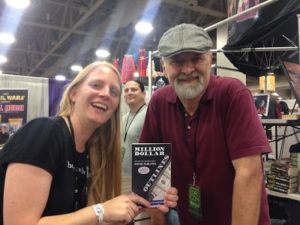
Check out Dave’s book Million Dollar Outlines.
Bestselling author David Farland has taught dozens of writers who have gone on to staggering literary success, including such #1 New York Times Bestsellers as Brandon Mull (Fablehaven), Brandon Sanderson (Wheel of Time), and Stephenie Meyer (Twilight). In this book, Dave teaches how to analyze an audience and outline a novel so that it can appeal to a wide readership, giving it the potential to become a bestseller. The secrets found in his unconventional approach will help you understand why so many of his authors go on to prominence.