Writing Tips: Motivation vs. Habit

Motivation Vs. Habit sign
Are You Ready for NaNoWriMo?

The annual National Novel Writing Month is starting November 1st. Every year since 1999 authors set out to nurture creativity and provide the structure, community, and encouragement to help people find their voices. Since 1999, almost 800,000 novelists have completed 368,000 novels during NaNoWriMo. I’d like to help you participate, starting with helping you get motivated by telling you a story about something I read a few years back. 

On the door at my gym, someone hung a sign that says, “Motivation is what gets you started. Habit keeps you going.”

I began working out regularly over 20 years ago. Since then, I’ve dropped about 75 pounds, and I’ve run or walked something in the neighborhood of 22,000 miles. I can’t even imagine how much I’ve lifted in weights. But think about it, if someone had said to me, “Hey, Dave, why don’t you go run 22,000 miles?” it would have taken an awful lot of motivation to get me going.

However, it only took a tiny bit of habit.

How to Turn Writing Into a Habit

A lot of us try hard to get motivated to write a novel. But writing a novel is a lengthy process. Being motivated doesn’t help much, but developing good writing habits helps a lot.

I learned long ago that exercise is hard when you’re starting out. If you run three days, you’ll want to quit at the end of them. That’s when muscle aches and fatigue are the strongest. But if you run for a week, you’ll begin to notice that you feel better on the days that you’ve run. Soon, the day won’t feel complete without some exercise.

Jumping into a project is hard. Working on a novel for one day doesn’t really get you very far into it. But if you try making it a habit—if you bundle all of that motivation up and say to yourself, “I’m going to write for one hour a day this week,” you’ll find at the end of the week that you just don’t really feel that your day is complete if you haven’t spent some time engaged in creative recreation.

Setting Goals and Keeping Them

lack of motivation

Over at Apex Writers we hold strategy meetings once a week. There I try to motivate my students to write daily, if only for a couple of hours. We’ve also been holding daily writing sprints where we can write together as a group. The goal in part is to teach the writers and get them to develop new skills, but just as importantly, I’m trying to get them into the habit of writing.

Quite often it works. I’ve gotten many letters from writers where the writer has said, “Hey, Dave, I got into the habit of writing at your workshop last year, and I’ve just finished my first/second/third/fourth novel!” Whenever I see that, I always feel as if the mission has been accomplished.

So Here’s the Key to Becoming a Writer: 

Use your motivation to create a writing habit. Long after you have run out of motivation, you’ll still be writing.

If you’d like more motivation, I’ve created a course called “The Story Puzzle” which you can buy individually, or as a bundle on mystorydoctor.com. For those of you who want even more help to get motivated, come to apex-writers.com and join our writing group where we will be holding daily writing sprints where authors work together to create their novels, get direction from fellow writers, and grow stronger as a community together. The courses including The Story Puzzle are all available at apex-writers.com 

Happy writing!

David Farland


P.S. keep reading to learn about some special guests coming soon to Apex Writers!
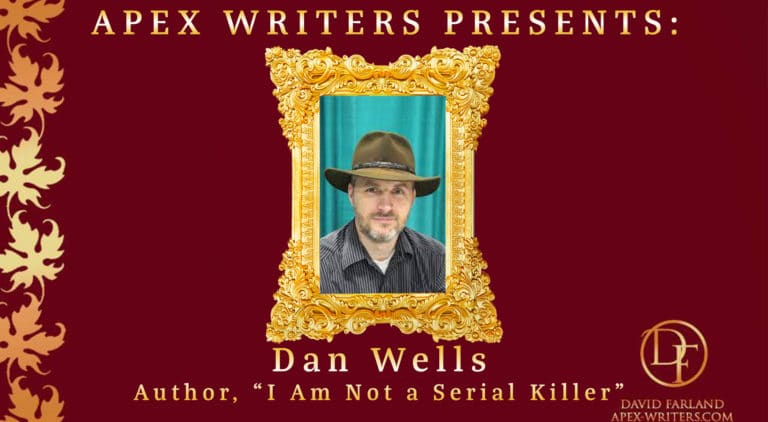
Dan Wells

Daniel Andrew Wells is an American horror and science fiction author. Wells’s first published novel, I Am Not a Serial Killer, was made into a movie in 2016. A former student of David Farland at BYU, a true hometown hero for the state of Utah. 
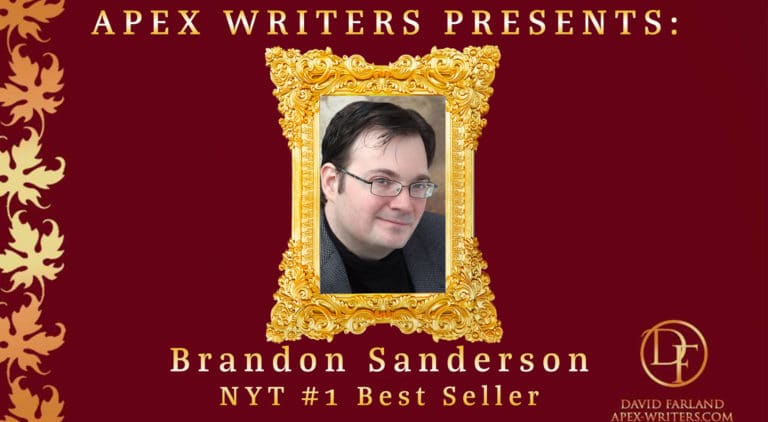
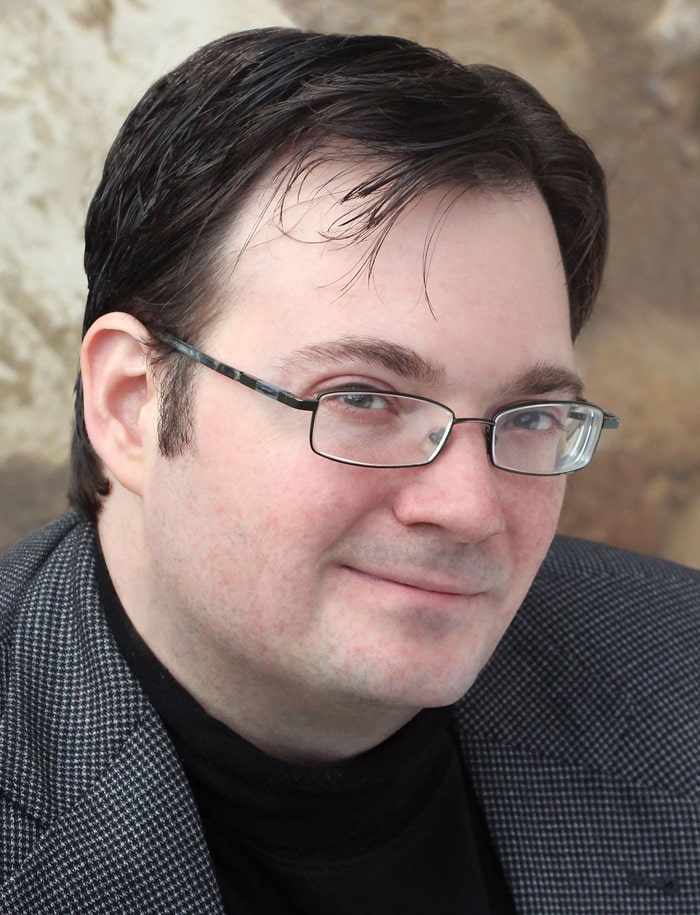
Brandon Sanderson

If you read fantasy and sci-fi, chances are you’ve heard of Brandon Sanderson, whether that’s from The Way of Kings, Mistborn, Skyward, Steelheart, or Alcatraz vs. the Evil Librarians. Brandon has become one of the most recognizable authors of the 21st century, and now he’s coming to www.apex-writers.com
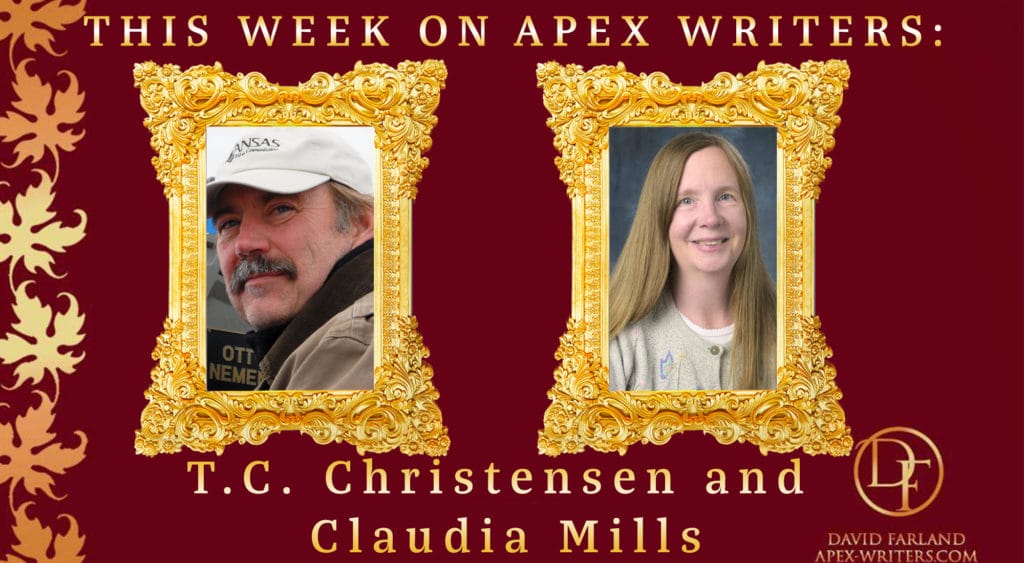
Week of October 25
Come to www.apex-writers.com to hear from special guests!
T.C. Christensen is an American filmmaker who has won over 270 national and international awards for his work in directing and photography. In 2010, he was invited to join the American Society of Cinematographers.

Claudia Mills is an American author of children’s books. She is also an associate professor of philosophy at the University of Colorado Boulder.

 
Live and past recorded Apex Calls are one of the many membership benefits that are included with your subscription at https://www.apex-writers.com/

Leave a Reply

Did you like this writing tip?
Click below to share with your friends

Related Posts
how to get a book published
David Farland

How to Get a Book Published 

Are you looking to publish a book? Let me tell you how to get it done.  Today, there are two paths to publishing: traditional publishing and self- (or independent) publishing.  

READ THIS POST
david farland jackie chan
David Farland

How to Build a Better Outline For Your Novel

You probably wouldn’t sink a million dollars into building a home without a blueprint. You certainly wouldn’t begin creating something as intricate as a cathedral without detailed plans. So why would you sink a year or two into composing a novel without plotting it?

READ THIS POST
how to write a short story
David Farland

How to Write a Short Story

As lead judge to the world’s largest competition for sci-fi and fantasy short fiction, David Farland can tell you exactly how to write a short story that’s a winner. The

READ THIS POST
how to write a book
David Farland

How to Write a Book

If you aren’t excited about a novel, chances are excellent that you’ll lack the energy to finish it. Your subconscious will rebel at the idea, and you’ll just go through the motions, wishing that you were working on another project. So you have to find story ideas that thrill you. You have to write from the heart.

READ THIS POST
How to write a book
David Farland

How to Write Your First Five Pages

How to Write Your First Five Pages:
1. From the very first sentence, I want to see that you’re not just a competent writer, but a skillful one.

I want to see that you have a way with words, so that I feel as if I’m in the hands of a professional storyteller. That means that I won’t feel confused, and I won’t get tripped up by typos or beginner’s mistakes. Indeed, I want to see that you’re talented right from the first sentence. Half of the editors and agents say that they look for a great voice right out the gate, whether it be the voice of the narrating character or of the author.

READ THIS POST
A colorful light bulb in front of interlocking red, yellow, and blue gears, symbolizing creativity and productivity working together.
Tammy Burke

Brainstorming for Stories: How to Turn Sparks into Worlds

Brainstorming is one of the most magical—and challenging—parts of being a writer. Ideas may arrive in a rush or drip in slowly, but either way, they form the first threads of story. The truth? Waiting for inspiration won’t always serve you. Instead, the key is to explore how to spark fresh ideas from familiar tropes, surprising “what ifs,” and creative collisions. Originality doesn’t mean inventing something brand new—it means putting your unique spin on timeless patterns so readers experience them as both familiar and exciting.

READ THIS POST
A figure in a bright red cloak walks across a black-and-white field toward a tree whose shadow stretches long across the ground. The word “Foreshadowing” appears in dark red letters to the right.
Tammy Burke

Foreshadowing in Writing:

Foreshadowing is the art of planting clues that make your story’s twists feel both surprising and inevitable. Learn the different types of foreshadowing, strategies for layering clues, and how to test your twist so it hits the perfect balance.

READ THIS POST
Stone statue of a robed woman, captured against a dramatic sunrise sky with soft orange and blue clouds, symbolizing inspiration and waiting.
Special Guest

Why Your Writing Muse Isn’t Your Friend

Too many writers wait for the writing muse to return, convinced that inspiration is the only way forward. But waiting keeps you stuck, staring at the page. The truth? Momentum is born not from longing, but from action. Start writing, and the muse may find you already at work.

READ THIS POST
No more posts to show

Wait, before you go… Be sure to grab a FREE copy of Dave's Proven Writer Tips for 100 Days!

Daily meditations Writer Tips for 100 days book image

Enter your name and email below to get it delivered straight to your inbox!

Brandon Sanderson
Brandon Sanderson#1 New York Times bestselling author of The Way of Kings and Mistborn
Read More
"I still use the writing techniques he discussed, and constantly reference him and his instruction when I teach creative writing myself. . . His explanations led me directly to getting an agent, and subsequently, my first book deal."