Write What You Know or What You Can Imagine?

Write What You Know or What You Can Imagine?

Many years ago, the most common bit of writing advice doled out to aspiring authors was “write what you know”. We all became so familiar with that advice, even third-grade children considered it when choosing topics for their creative writing assignments.

However, Frank Herbert certainly never visited the barren and dangerous world of Dune prior to writing about it so convincingly. Obviously writing what you know isn’t exactly the be-all-and-end-all of writing advice.

Perhaps, write what you imagine, would be more accurate—because if all of us wrote what we knew, the world would be filled with books about ordinary people living out simple lives in boring towns and cities around the globe.

But our minds and imaginations are remarkable places and writers in particular are blessed with the ability to imagine such places as if they lived there, breathed the air, tasted the dust on their tongue. And readers are hungry to be transported from the ordinary to the extraordinary.

Your challenge is to become so in tune with the world around you now, that you can imagine your invented world. Take the time to study the world around you—people, places, even conflicts. Get out of the house, people- and relationship-watch, visit a working lab, study a biology textbook, learn.

If you’ve never felt snow melt on your skin, sand sinking away from your toes as the tide rushes out or the thrill of driving a car very, very fast, how can you write it in such a way that the reader can feel it, too?

You don’t have to have experienced every little thing life has to offer, but you do have to live, study and experience.

As writers, we’re naturally inclined toward reclusiveness, but that’s a shortcoming we have to overcome. Get out there. Experience as many things as possible. That way, when you want to write about a world where moisture clings to the air like floating dew, you’ll know exactly what that feels like (and all the accompanying trials of such a place) because you spent a few days in Maine during autumn.

Write what you know … in ways no one else can imagine.

WritingTips

Frank Morin recently released his latest book, Memory Hunter. Buy it here.
Memory Hunter is a thrilling alternate history. When Sarah is targeted by enhanced assassins, she’s drawn into the epic struggle between the mysterious facetakers and their ancient enemies. Romance, deception and constant action make Memory Hunter a fast read. This is the first book of a trilogy which spans the globe and delves deep into the past as history becomes the battlefield.

Fem~Machina: short stories volume 1 and 2 by Sylvia Heartz are now available on Amazon Kindle.
A psychiatrist manipulates patients’ dreams to cure their mental hangups, a pillow floats a girl safely to the ground, a loyal faery aids her dragon, a middle school bully vanishes into a fae locker, a woman escapes a life of abuse by merging with a horse, and a shiny white pot the size of a toad has the power to end the world – and more. Each volume contains six pieces of art and nine stories; each story is accompanied by a short introduction.

Transform your storytelling in just 100 days!
Dive into ‘Daily Meditations: Writer’s Tips for 100 Days’ for FREE and unlock the secrets to crafting compelling narratives. Start your adventure now!

Leave a Reply

Did you like this writing tip?
Click below to share with your friends

Related Posts
how to get a book published
David Farland

How to Get a Book Published 

Are you looking to publish a book? Let me tell you how to get it done.  Today, there are two paths to publishing: traditional publishing and self- (or independent) publishing.  

READ THIS POST
david farland jackie chan
David Farland

How to Build a Better Outline For Your Novel

You probably wouldn’t sink a million dollars into building a home without a blueprint. You certainly wouldn’t begin creating something as intricate as a cathedral without detailed plans. So why would you sink a year or two into composing a novel without plotting it?

READ THIS POST
how to write a short story
David Farland

How to Write a Short Story

As lead judge to the world’s largest competition for sci-fi and fantasy short fiction, David Farland can tell you exactly how to write a short story that’s a winner. The

READ THIS POST
how to write a book
David Farland

How to Write a Book

If you aren’t excited about a novel, chances are excellent that you’ll lack the energy to finish it. Your subconscious will rebel at the idea, and you’ll just go through the motions, wishing that you were working on another project. So you have to find story ideas that thrill you. You have to write from the heart.

READ THIS POST
How to write a book
David Farland

How to Write Your First Five Pages

How to Write Your First Five Pages:
1. From the very first sentence, I want to see that you’re not just a competent writer, but a skillful one.

I want to see that you have a way with words, so that I feel as if I’m in the hands of a professional storyteller. That means that I won’t feel confused, and I won’t get tripped up by typos or beginner’s mistakes. Indeed, I want to see that you’re talented right from the first sentence. Half of the editors and agents say that they look for a great voice right out the gate, whether it be the voice of the narrating character or of the author.

READ THIS POST
A colorful light bulb in front of interlocking red, yellow, and blue gears, symbolizing creativity and productivity working together.
Tammy Burke

Brainstorming for Stories: How to Turn Sparks into Worlds

Brainstorming is one of the most magical—and challenging—parts of being a writer. Ideas may arrive in a rush or drip in slowly, but either way, they form the first threads of story. The truth? Waiting for inspiration won’t always serve you. Instead, the key is to explore how to spark fresh ideas from familiar tropes, surprising “what ifs,” and creative collisions. Originality doesn’t mean inventing something brand new—it means putting your unique spin on timeless patterns so readers experience them as both familiar and exciting.

READ THIS POST
A figure in a bright red cloak walks across a black-and-white field toward a tree whose shadow stretches long across the ground. The word “Foreshadowing” appears in dark red letters to the right.
Tammy Burke

Foreshadowing in Writing:

Foreshadowing is the art of planting clues that make your story’s twists feel both surprising and inevitable. Learn the different types of foreshadowing, strategies for layering clues, and how to test your twist so it hits the perfect balance.

READ THIS POST
Stone statue of a robed woman, captured against a dramatic sunrise sky with soft orange and blue clouds, symbolizing inspiration and waiting.
Special Guest

Why Your Writing Muse Isn’t Your Friend

Too many writers wait for the writing muse to return, convinced that inspiration is the only way forward. But waiting keeps you stuck, staring at the page. The truth? Momentum is born not from longing, but from action. Start writing, and the muse may find you already at work.

READ THIS POST
No more posts to show

Wait, before you go… Be sure to grab a FREE copy of Dave's Proven Writer Tips for 100 Days!

Daily meditations Writer Tips for 100 days book image

Enter your name and email below to get it delivered straight to your inbox!

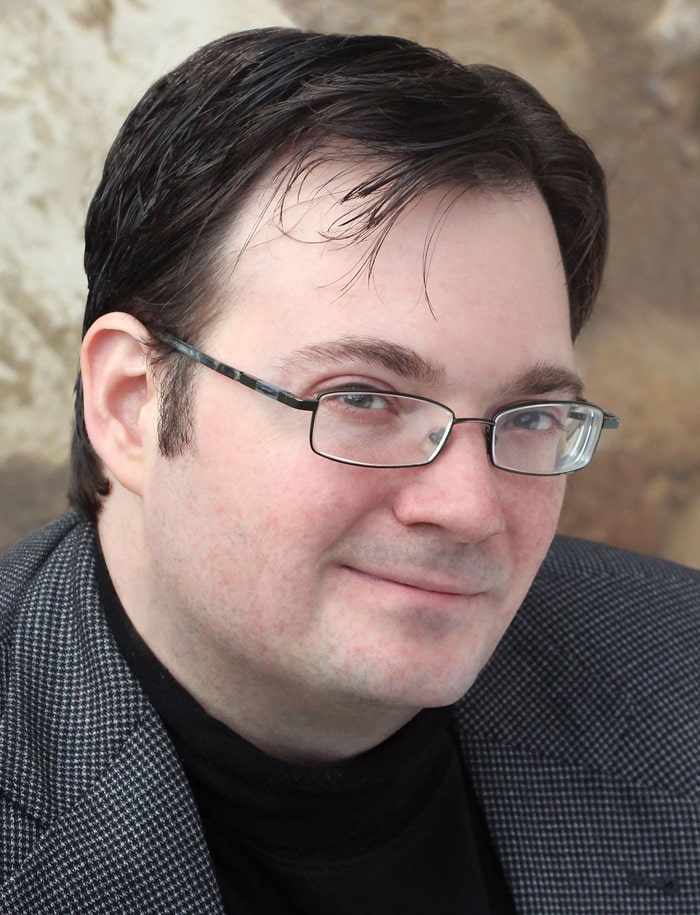
Brandon Sanderson
Brandon Sanderson#1 New York Times bestselling author of The Way of Kings and Mistborn
Read More
"I still use the writing techniques he discussed, and constantly reference him and his instruction when I teach creative writing myself. . . His explanations led me directly to getting an agent, and subsequently, my first book deal."