

Are You Excited for NaNoWriMo?
The annual National Novel Writing Month is starting November 1st. Every year since 1999 authors set out to nurture creativity and provide the structure, community, and encouragement to help people find their voices. Since 1999, almost 800,000 novelists have completed 368,000 novels during NaNoWriMo, and it’s time for you to be excited because you could be the next big thing in writing.
Getting Excited
The most productive writers, I’ve noticed, aren’t necessarily the ones with the most talent or the greatest skills. They may not be the most physically fit or even the most motivated. The most productive writers are the ones who get excited by their work.
What do I mean by “getting excited”? Quite simply this. To some degree, we are responsible for our attitudes. We have to be. We must learn to control them. We need to be actors, not creatures that are acted upon.
And the single greatest thing that you can do to motivate yourself to write is to cultivate an attitude of excitement, one that energizes you and drives you to work hard, to spend every spare moment productively.
So, how can you get excited about a story? Here are just a few steps to building excitement.
1. Block out negative thinking

I have sometimes heard authors say, “I’d love to write a novel about X, but I know that I can’t do it.” That’s bull. You can write a novel about anything that you want. Do you want to write military science fiction but feel handicapped because you haven’t been in the military? Guess what, you can do it! You might have to consult with a few military experts and make sure that you get the details right, but you can do it. Do you want to write a historical novel but don’t feel you have the expertise? Expertise comes to those who study.
If you’re capable of talking on the phone for an hour, then you can write for an hour. It’s really that simple.
Sometimes we want to succeed in our art all at once. We want a huge novel to be written “now,” and we want it to be flawless.
Accept the fact that your first draft will be flawed, but know that with a small amount of effort you can make it better, and over the course of several drafts, you can make your book virtually perfect.
2. Cultivate your excitement

Find out what makes you write. Many authors are motivated by praise. Sometimes, praise can come from fans. So if you’re working on a story, try to imagine how it might affect others.
I’ve gotten wonderful letters from fans who tell me that my novels have often changed their lives. For example, one young man has carried a copy of one of my Star Wars novels with him for years. He explained that when he was 8, his mother died. He was terribly sad for a couple of years, and then one day realized that when he was reading my book, he felt happy. So he kept a copy to read while waiting at the bus stop, or while sitting in school. Other fans have written to tell me how their books have inspired them while in battle, or while facing life-threatening illnesses. Seriously, before I began writing, I never realized what kind of influence my work might have on the world.
Other times, authors seek praise from critics. I sometimes suggest that before you write a book, that you sit down and write out your own review of the novel.
For example, with my first novel, I sat down and wrote out my own review in advance. I knew that I wanted a novel that was “deep and powerful.” So I was very pleased when my first review offered the quote, “. . . one of the deepest and most powerful science fiction novels ever written. Many fine books that have won Hugos and Nebulas pale in comparison.” Seriously, in my wildest imaginations, I hadn’t considered the possibility of getting a quote like that.
But there are other types of praise. For example, I’ve known some authors who are motivated by the prospect of winning awards. Is that a bad thing? I think “needing” an award is a way to set yourself up for heartbreak, but if you write a short story with the idea that, “Hey, this is a gamble, but I think that it’s a good gamble,” then writing for awards can be a good motivator. It’s sort of like betting in a card game. You put together the best hand that you can, and see if you win.
There are other people who might offer praise—a spouse, your family members, or people in your writing group.
But we don’t just write for praise. Sometimes we write from a burning need to express ourselves, to say something of import. Are you a revolutionary? Then I invite you to change the world.
3. Don’t Be Afraid of the Rewards

Sometimes we can get excited by looking at the financial rewards from writing. Too often, people will poo-poo the idea that you can make money in this business, but over the past 25 years I’ve managed to bring in a few million—and I’m just getting started. I had an idea for a novel series yesterday that I am sure is good for a large chunk of change, and I have several more promising novels in the works. Will I become as rich as J.K. Rowling? Nah. But I’ll have fun writing what I love while making good money, and that’s well worth the time.
You see, there are a lot of rewards that come with the writing life. I don’t have to worry much, for example, about office politics. I’m pretty much self-employed. That means that I can work where I want and when I want. This morning I got up at four in the morning, thinking about writing this article. I wrote it while sitting in my overstuffed chair recliner, on my new Alienware laptop, before the sun ever began to rise. If I wanted, I could fly down to Cabo and compose while the sun is rising above the sea, or fly up to Yellowstone and get myself a cabin and pause to think while looking out over a herd of bison in the snow.
There are a lot of great things that come from writing. Think about them often. Let yourself get excited. Every moment of every day offers you the opportunity to write. Take advantage of those moments!
If you’d like more motivation, I’ve created a course called “The Story Puzzle” which you can buy individually, or as a bundle on mystorydoctor.com. For those of you who want even more help to get motivated, come to apex-writers.com and join our writing group where we will be holding daily writing sprints where authors work together to create their novels, get individualized feedback, and grow stronger as a community together.
Happy writing,
David Farland
P.S. keep reading to learn about some special guests coming soon to Apex Writers!
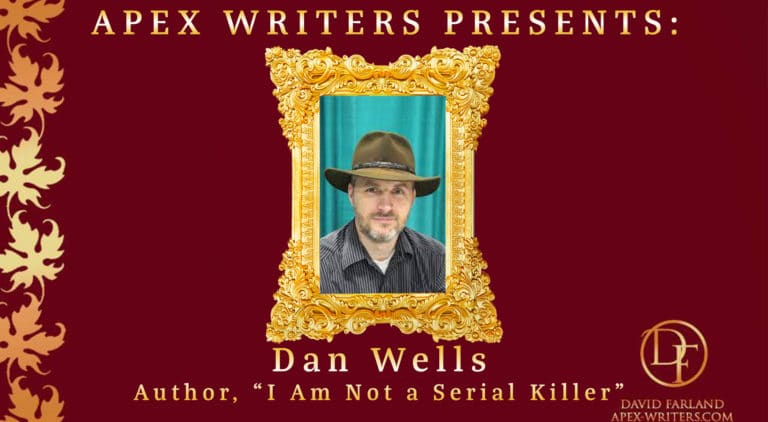
Daniel Andrew Wells is an American horror and science fiction author. Wells’s first published novel, I Am Not a Serial Killer, was made into a movie in 2016. A former student of David Farland at BYU, a true hometown hero for the state of Utah.
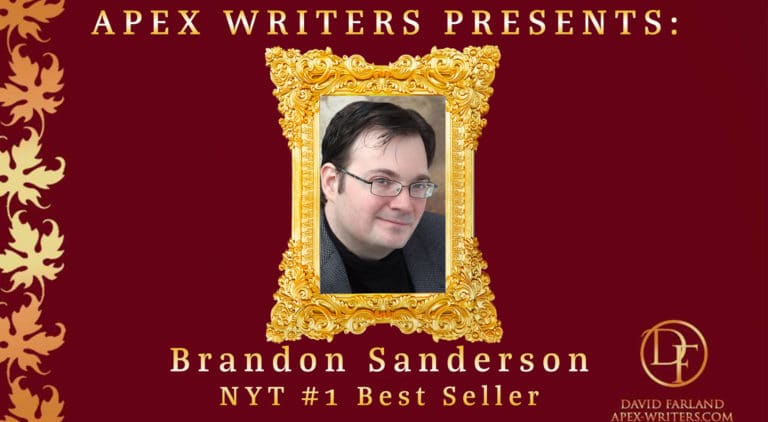
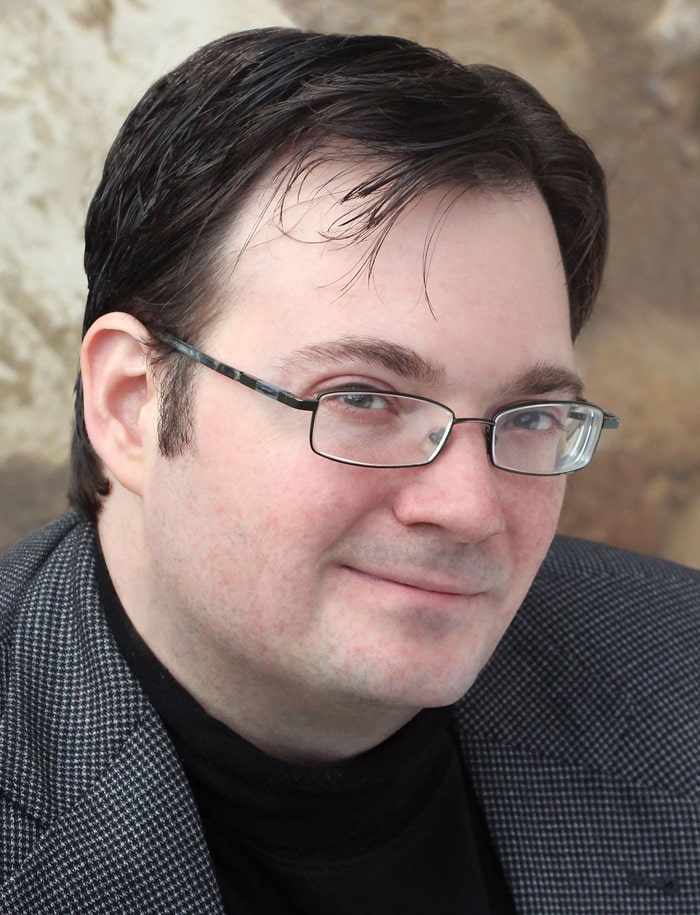
If you read fantasy and sci-fi, chances are you’ve heard of Brandon Sanderson, whether that’s from The Way of Kings, Mistborn, Skyward, Steelheart, or Alcatraz vs. the Evil Librarians. Brandon has become one of the most recognizable authors of the 21st century, and now he’s coming to www.apex-writers.com
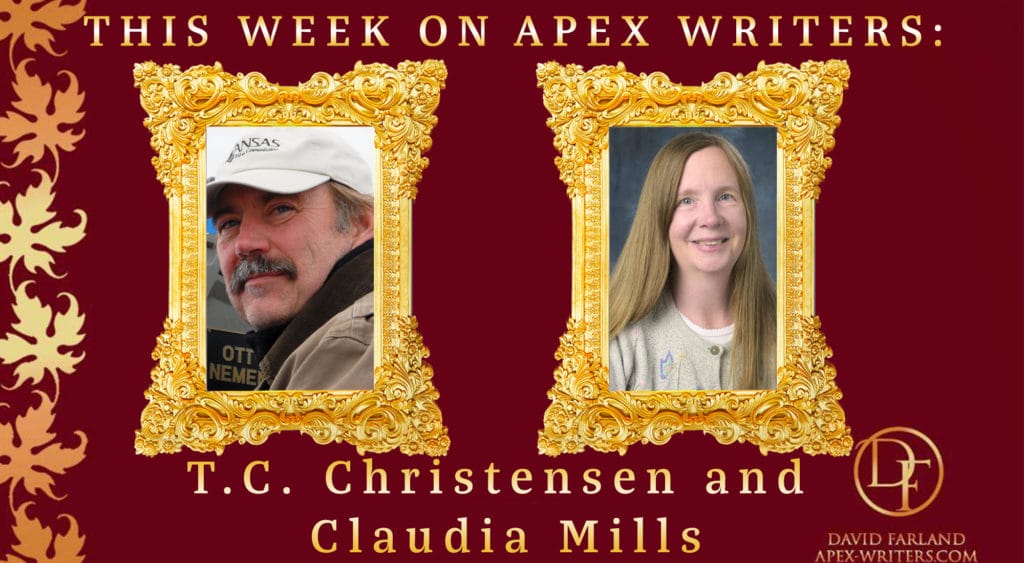
T.C. Christensen is an American filmmaker who has won over 270 national and international awards for his work in directing and photography. In 2010, he was invited to join the American Society of Cinematographers.
Claudia Mills is an American author of children’s books. She is also an associate professor of philosophy at the University of Colorado Boulder.
Live and past recorded Apex Calls are one of the many membership benefits that are included with your subscription at https://www.apex-writers.com/