

Strong stories are built through meaningful scenes. Write stories that have meaning by tapping into subtext or theme, or by adding your own insight.
Very often as a reader, I’ll come across a story that is well written in many regards: The characters have strong voices. The setting is energetically created. The action progresses in a logical and emotionally satisfying manner. Yet the story will feel dead, empty.
I can almost always spot the problem quickly: the author has nothing interesting to say at the level of subtext. There is no theme, no passionate argument, no evidence that the author has thought deeply about his or her story or, for that matter, about anything in life at all.
You see, a story without substance is about as satisfying as a meal made entirely of Jello. It might have a perky flavor to it, but it doesn’t really nourish us. It doesn’t make us want to go out into the street, grab strangers by the throat, and say to them, “You’ve got to try this!”
So we have a problem with writers who seem to have nothing to say. This is particularly common in several classes of writers:

The Burned-out Master
One of them, of course, is the burned-out master, that writer who has pretty much said all that he has to say in life and is now merely writing from craft, not from the heart. I’m reminded of a critic who once said Hemingway’s The Old Man and the Sea was a finely crafted novel that merely reiterated everything that Hemingway had stated thirty years before, but without any of the passion. I’d felt that way about it, too.
A writer who is stuck in this rut needs to find his heart, regain his drive. Usually a nice vacation from writing for a couple of years will suffice.
(Need help recharging your creative batteries? Check out David Farland’s “Recharge Your Creative Batteries” online course.)

The Very Young Writer
The other class of writer that often lacks depth is of course the very young writer. A teenager who loves Stephanie Meyer or J.K. Rowling will usually try to write just like her favorite author. There is nothing wrong with that, except that too often, as a reader you can feel the burden of the author’s naïveté about life. Too often there is very little insight into much of anything—philosophy, human motivations. There is not much real understanding of politics or economics. The author just shows in a hundred little ways that he or she hasn’t been on the planet for very long, and the time spent here has been spent primarily on getting a broad education. That’s okay. But personally, I found that my own writing gained strength only after I’d spent time as a prison guard. Hemingway and Tolkien had to go to war. For others, depression or madness brought out the best in them. Other stressors that might help you are a good divorce, taking part in the violent overthrow of a government, or struggling through grinding poverty. In short, writers in this class just need to live!

The Insecure
Last of all, there are those people who do feel passionately but just don’t write about the ideas or topics that they feel passionate about. Sometimes such people don’t write about their passions out of moral cowardice, but I’m pretty sure that in most cases, they just don’t think that others will be interested! They feel that their own personal wars and the insights gained from them just won’t play on the global stage. If you fit into that category, you may have plenty of material to mine. Did you grow up on a ranch in Montana, dreaming of life in the big city? That might seem boring to you, but such a life has spawned dozens of bestsellers. So look at your own life carefully. See if you can pull out the treasures buried deep inside you.
Previously published
***
Star Wars. Dune. Harry Potter. Lord of the Rings. Four epics that have been loved for decades, won millions of fans, and made the creators millions of dollars. Many of us dream of writing an epic fantasy or science fiction story . . . but it’s definitely easier said than done. Thankfully, we can help you get it done! We will be starting our Epic Novel Writing Workshop on September 3rd.
First, we will study and discuss each of those epic stories, then we will put students in groups to brainstorm and complete assignments for their own epics. You will get feedback from critique partners, as well as from the instructor–best-selling author Rafael Hohmann. This class is limited to 15 students. The course is $990. Register before the spaces are filled!
***
Happening Soon on Apex
Tonight at 5:30 pm Mountain Time (7:30 pm EST)

Come join us for Monday evening strategy meetings. We will be working to give authors tools, knowledge, and motivation to create original, best-selling stories and the self-defined successful careers they want. Some weeks, we will focus on high level strategic areas writers need to consider and plan for, and other weeks, we will get down to the details of strategy implementation. Don’t miss out. We meet every week at 5:30 MT. Come strategize!
Tonight at 7 pm Mountain Time (9 pm EST)

Plot Pattern Analysis (Cracking the Story Code) with Amy White
Description: We have Amy White joining us to talk about Plot Pattern Analysis using the extremely powerful Farmer System of Narrative Analysis (FSNA). FSNA is often called Cracking the Story Code
Bio: Amy White is licensed as a masterclass teacher, story analyst, and Cracking the Story Code graphic artist for the patent-pending Farmer System of Narrative Analysis (FSNA aka The Story Code). She has 13 years of experience analyzing, green-lighting, and coaching. Amy is a retired children’s librarian.
She now co-creates FSNA licensing conferences with Katherine Farmer, and Story Code courses with Wendy Folsom.
Amy is the author of the bestseller Dressing the Naked Hand, a book on puppetry and creating puppets. She is a master puppeteer and performer. When not recording YouTube movie reviews—it’s the best excuse EVER to watch movies–Amy drives tractor on the family farm harvesting alfalfa.
Wednesday at 7 pm Mountain Time (9 pm EST)
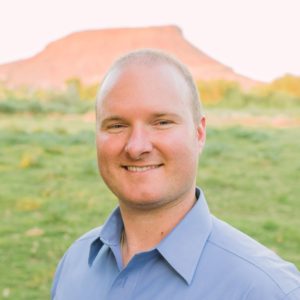
Every week, Forrest Wolverton holds the Apex Accelerator Program. This program is designed to help motivate writers and help them get past the obstacles in their life to become the best writer they can be. There aren’t very many writing groups out there that have motivational speakers!